
 Facebook
 X
X
 Pinterest
 Copy Link
Competing for a Home in Lake Hills Bellevue
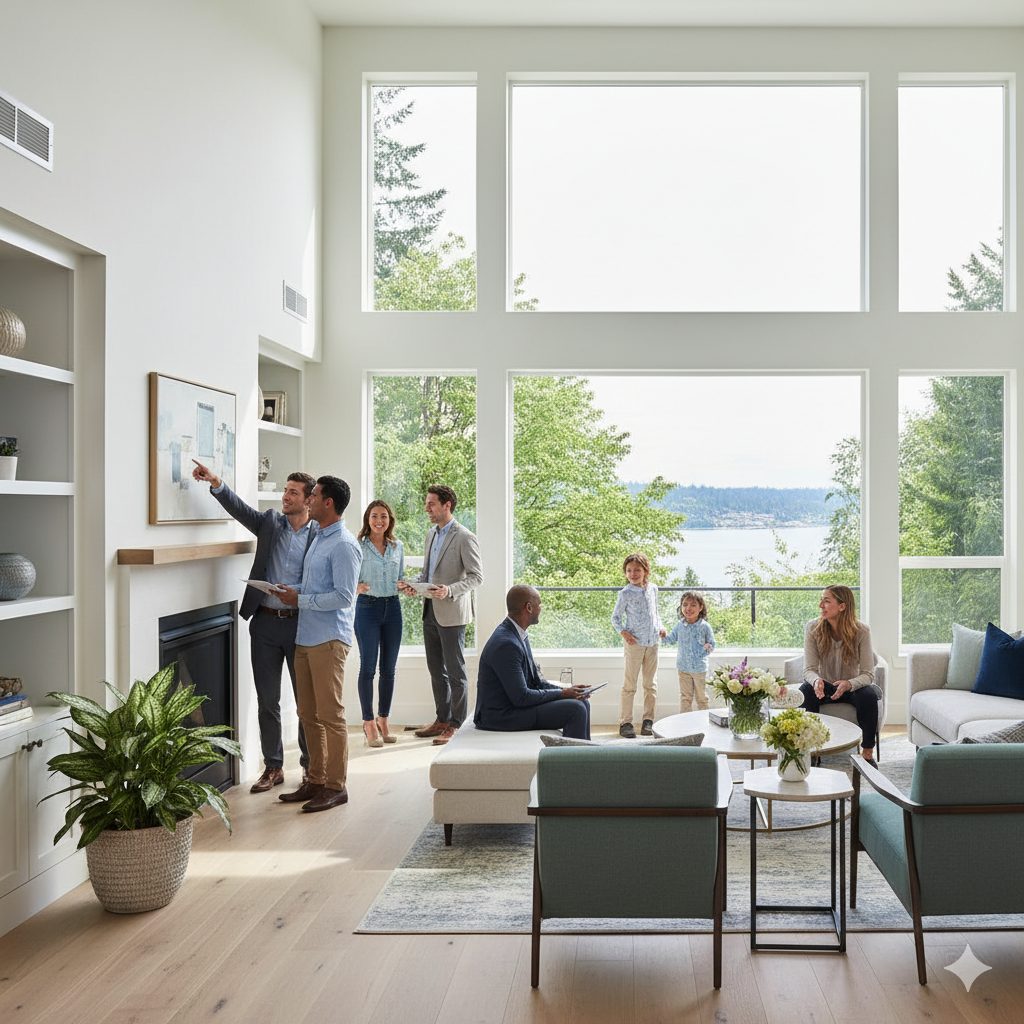
How to Buy a Home in Lake Hills, Bellevue – Part 2: How to Compete and Close
If you’ve done the preparation work – pre-approval in hand, clear on your budget, and familiar with how this market moves – you’re ready for the next step. Here’s how to compete effectively and make sure you know exactly what you’re buying before you commit.
See more homes than you think you need to
Clarity about what you want comes from comparison, not from a floor plan in your inbox. The more homes you see, the better you understand what matters to you – and what you’re willing to trade off.
I attend showings with my buyers. That means real-time feedback, honest observations about what we’re seeing, and a clearer picture of your priorities as we go. By the time you’re ready to make an offer, we both know exactly what you’re buying and why.
Use your agent’s seller-side experience
Most buyers don’t think about this, but it matters. An agent who has represented sellers in this market knows what a strong offer looks like from the other side of the table. They know what signals serious intent, what raises red flags, and what gives a seller confidence that a deal will close.
That knowledge translates directly into how your offer is structured and presented. In a multiple-offer situation, the difference between winning and losing isn’t always price. It’s often the details – the terms, the timing, the way the offer is put together. Seller-side experience is a genuine advantage for buyers in a competitive market.
Know what you’re buying before you offer
Making a strong offer isn’t just about price. It’s about understanding exactly what you’re buying. That means reviewing every document carefully before anything is signed.
In Washington, sellers are required to complete a Form 17 – a disclosure statement that covers the known condition of the property. Read it thoroughly. It tells you a lot, and what’s missing from it can tell you just as much. If the home is part of a homeowners association, the HOA rules, regulations, and financials deserve the same attention. Restrictions on rentals, pet policies, pending special assessments – these aren’t small print. They’re part of what you’re agreeing to.
The seller’s inspection report and the title documents round out the picture. A title search surfaces anything that could affect your ownership – liens, easements, encumbrances. An inspection report tells you the condition of the home as the seller understands it.
One thing I always recommend for Lake Hills specifically: get a sewer scope. Most of these homes are nearly 70 years old. The original sewer lines are still under a lot of them, and problems with aging pipes are common and expensive. A sewer scope is a relatively small cost that can surface a significant issue before you’re committed. I walk through all of these with my buyers before we make an offer, because an informed offer is a confident one.
What working with me looks like
I’m an education-first agent. Before we tour anything, I want to make sure you understand how this market works, what the process looks like at each step, and what we’re trying to accomplish together. No one should sign something they don’t understand.
I’ll be with you at every showing. I’ll tell you the truth about what we’re seeing – including when a home isn’t right, even if you like it. And when we find the right one, I’ll advocate hard to help you get it.
If you’re thinking about buying in Lake Hills or anywhere on the Eastside, the best first step is a conversation. Tell me where you are in the process, what you’re looking for, and what questions you have. We’ll figure out what comes next from there.
Maggie Wong | Coldwell Banker Bain | 425-765-8042 | Maggie.Wong@cbrealty.com
Informed Real Estate for Every Move
How to Buy a Home in Lake Hills Bellevue
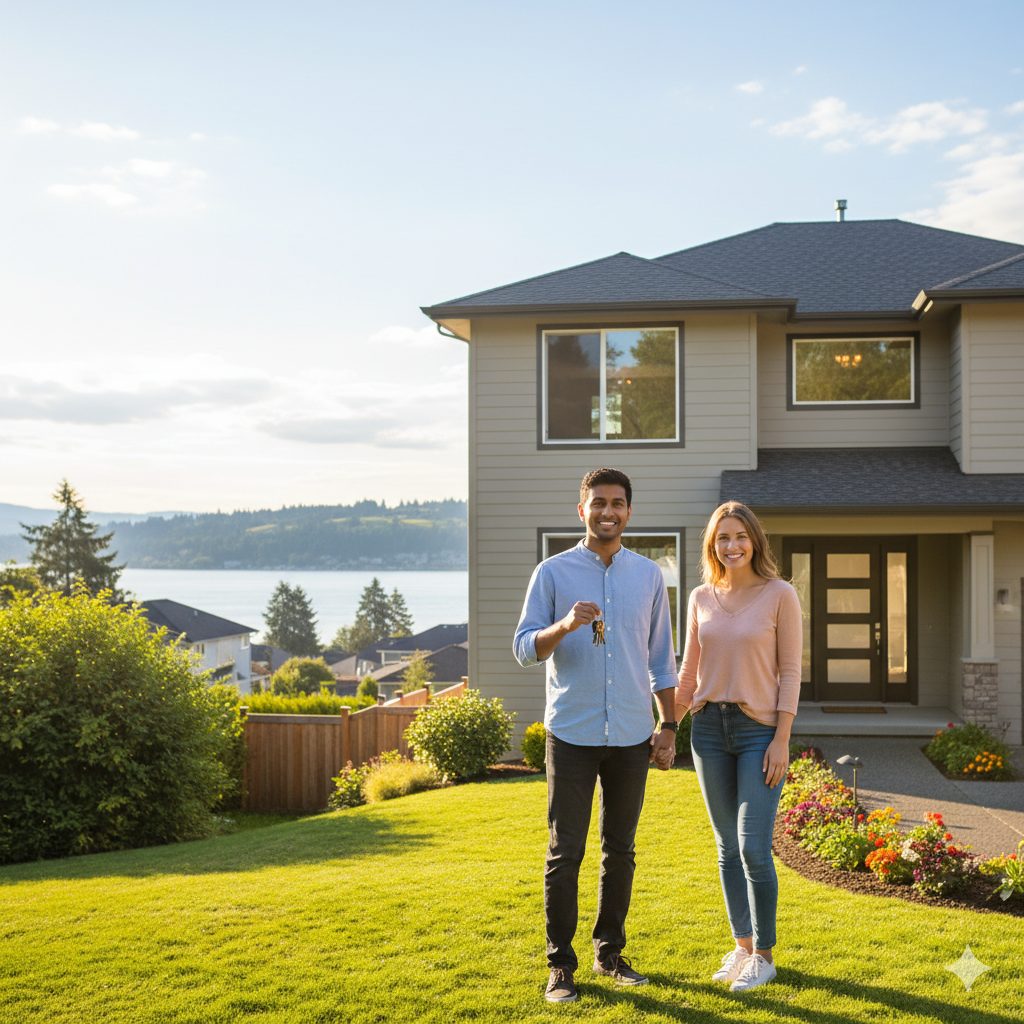
How to Buy a Home in Lake Hills, Bellevue – Part 1: Getting Ready
Lake Hills is one of the most accessible entry points into the Bellevue market – mid-century homes, established neighborhoods, good schools, and a genuine sense of community. It’s also competitive. If you’re serious about buying here, preparation isn’t optional.
Here’s what you need to know before you start.
Understand the market you’re walking into
Bellevue runs on tech money. Microsoft, Amazon, Google, and dozens of smaller firms employ a workforce of high-income buyers who are active in this market year-round. That shapes everything – the pace, the pricing, and the competition you’ll face on any home you want.
Lake Hills sits in a price range that attracts a lot of those buyers. Homes here tend to move quickly and draw multiple offers when they’re priced and presented well. The buyers you’re competing against are often well-capitalized, experienced, and working with agents who know the market. Coming in unprepared is expensive.
Know when the market heats up
The conventional wisdom is that spring is the hottest time to buy. In Bellevue, that’s partially true – but the real surge often comes earlier. February and March tend to be the most competitive months of the year on the Eastside, and the reason is straightforward: that’s when tech workers receive their annual bonuses. A significant influx of buyers enters the market with fresh capital, and they move fast.
If you’re planning to buy in Lake Hills, getting ready in January gives you a real advantage. Waiting until April means competing in a market that’s already been running hot for two months.
Get pre-approved before you do anything else
This isn’t a formality. In this market, a pre-approval letter is table stakes. Sellers and their agents screen offers quickly, and an offer without solid financing behind it doesn’t get serious consideration – even if the price is right.
Pre-approval also clarifies your own position. It tells you exactly what you can spend, which shapes which neighborhoods and price points make sense for your search. Starting the process without it means touring homes you can’t buy or missing ones you can.
It’s March. There’s still time.
The bonus cycle is already in motion and the market is moving, but that doesn’t mean the window has closed. The right home takes the right preparation, and buyers who come in ready – pre-approved, informed, and clear on what they’re looking for – are still finding and winning homes in Lake Hills right now.
The best first step is a conversation. Tell me where you are in the process and what questions you have. We’ll get you ready to move when the right home comes up.
Maggie Wong | Coldwell Banker Bain | 425-765-8042 | Maggie.Wong@cbrealty.com
Informed Real Estate for Every Move
What to Do Before Your Parent Is Ready to Move

What to Do Before Your Parent Is Ready to Move
The families who navigate this well have one thing in common. They started the conversation before they had to – not during a fall, not after a diagnosis, not in the middle of a hospital discharge when everyone is exhausted and the clock is running. The families who fare best are the ones who built a picture of the situation before any of it felt urgent.
Here’s what that looks like in practice.
Start with a phone call
Before anyone walks through the door, a quick call helps establish the basics:
- What are the family’s goals?
- Is the parent part of this conversation, or is it coming from the adult children?
- Who’s involved, and who are the actual decision makers?
- Does the parent welcome their kids’ involvement, or is there resistance?
That last question matters most. A parent who feels like something is being done to them will dig in. A parent who feels heard will engage. Knowing which situation I’m walking into shapes how I approach the visit.
Build the picture
The early broker visit isn’t about listing the home. It’s about understanding the full situation so the family can make informed decisions on their own timeline. That means getting clear on:
- What the home is worth today, as it sits
- What it could be worth with targeted improvements
- What it needs and what that work would cost
- Who’s involved in the decision and what role each person plays
- Whether the parent welcomes this process or needs more time
Those numbers and that context shape everything that follows.
Talk about money before it becomes a crisis
For most families, the financial picture is more complicated than it looks. Many parents have significant equity in their home and considerably less in cash. There are real strategies that help:
- Creative financing options that don’t require cash up front
- Phased improvement plans that prioritize the updates with the strongest return
- Concierge services that front the cost of pre-sale work and are repaid at closing
- Resources that can help with assisted living move-in fees, which catch families off guard more often than you’d expect
None of those options are available to a family making decisions in a crisis. They require time and information to use well.
Aging in place is a real option
Not every early conversation leads to a sale, and that’s fine. Sometimes a broker visit surfaces what would need to change for a parent to stay in their home safely:
- Grab bars and accessibility modifications
- Moving a bedroom to the main floor
- Layout changes that work better for limited mobility
- Identifying deferred maintenance before it becomes a safety issue
If staying is the right call, the visit helps make that possible. If a move eventually makes more sense, the family already has the information they need.
Family alignment takes time
Siblings don’t always agree. That’s a reason to start earlier, not to wait. The practical questions are usually easier to align on than the emotional ones:
- What’s the home worth?
- What does the process actually look like?
- What’s a realistic timeline?
- What does each person need to feel heard?
Shared information reduces conflict more reliably than family negotiation on its own.
The one thing worth doing today
You don’t need a plan to start. A call costs nothing. A walk-through creates no obligation. But the information that comes from both tends to make every decision that follows clearer, calmer, and better for everyone involved – especially your parent.
If you’re thinking about this for your family, I’m glad to talk. I’ve been through it personally, I know this market well, and I have resources to help with the parts of the conversation that are hardest to navigate. Reach out whenever you’re ready.
Maggie Wong | Coldwell Banker Bain | 425-765-8042 | Maggie.Wong@cbrealty.com
Informed Real Estate for Every Move
Talking to a Parent Who Won’t Leave Their Home

How to Talk to a Parent Who Isn’t Ready to Leave Their House
At some point in this conversation, most adult children realize something has shifted. The goal isn’t helping a parent live independently anymore. It’s making sure they’re safe.
Safe physically – with food that’s accessible and nutritious, with no stairs to navigate after a fall, with someone nearby if something goes wrong in the night. And safe emotionally – with people around, with noise and activity, with the built-in community that comes from living somewhere designed for it. That doesn’t look like loneliness. It looks like life.
That shift in perspective doesn’t make the conversation easier. But it does change what the conversation is actually about.
Why parents resist, and why that’s reasonable
A home isn’t just a building. For most people of our parents’ generation, it’s the place where they raised their family, built their life, and defined their independence. Being asked to leave it can feel like being asked to give up the life itself.
That reaction deserves respect. Dismissing it, or worse, steamrolling it, tends to make the conversation harder and the relationship more strained. The goal isn’t to win the argument. It’s to understand what your parent is trying to protect, and to show that you’re trying to protect the same things.
What actually moves these conversations forward
Forcing the issue rarely works. What tends to work is patience, honesty, and giving your parent real information rather than a foregone conclusion. And let’s be honest: no one can actually make a stubborn parent move. As adult children, this transition goes better when our parents see us as partners and not adversaries.
Ask questions instead of making statements. What do they love most about their home? What worries them about leaving? What would have to be true for them to feel good about a change? These questions do more than gather information. They signal that the decision belongs to your parent, not to you.
Be honest about your own concerns without overstating them. If you’re worried about a fall, say so. If you’re worried about isolation, say that too. Parents often know these conversations are coming before their children find the courage to start them. Naming your concern directly tends to be less frightening than watching your child try to work up to it.
Don’t make it a single conversation. The families I work with who navigate this well almost never do it in one sitting. They plant the idea, let it settle, and come back to it. That’s not avoidance. That’s how people process something this significant.
Bringing in outside perspective
Sometimes the most useful thing is a voice that isn’t in the family. A broker walking through the home to talk about its condition and value is a low-stakes way to open the practical side of the conversation without it feeling like a verdict. It’s information, not a plan. And for many parents, having that information makes the idea of moving feel more like a choice and less like something being done to them.
I’ve had that conversation with a lot of families, including my own. There’s no pressure in it. Just a straightforward look at what’s there, what the options are, and what the timing could look like. That’s usually enough to move things forward.
What to hold onto
The goal you share with your parent should be the same. You both want them to be well. You both want them to feel at home somewhere. You both want the transition, if it happens, to be on terms that honor who they are.
Starting from that common ground doesn’t guarantee an easy conversation. But it tends to produce a better one.
If you’re in the middle of this with your family and would find it useful to talk, I’m here. I also have resources on how to approach tough conversations and listen carefully even when emotions are running high. No agenda, no timeline. Just a conversation when you’re ready.
Maggie Wong | Coldwell Banker Bain | 425-765-8042 | Maggie.Wong@cbrealty.com
Informed Real Estate for Every Move
Sell Parent’s Home Before or After Assisted Living
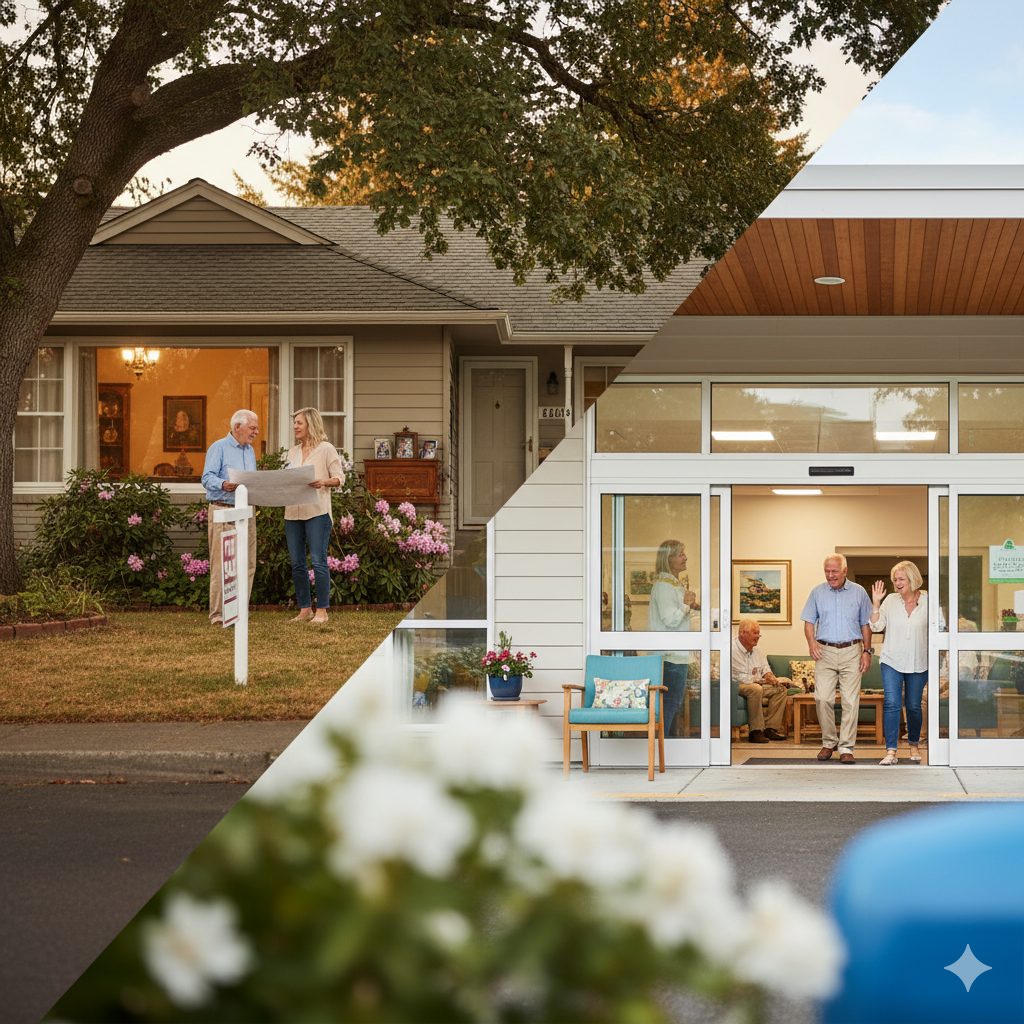
Should You Sell Before or After Your Parent Moves to Assisted Living?
Most families ask this question when they are already in the middle of everything else. The care decision has been made, or is close. The house is still full. And the timeline feels impossible.
There is no single right answer, but there is one thing I’ve seen consistently: the home shows better, sells faster, and nets more when the move happens first. Here is what makes that true, and what to do about the part that stops most families cold.
Decluttering a lifetime of memories takes more than one pass
A home someone has lived in for decades doesn’t get ready for market in a weekend. The process of going through belongings – deciding what moves with a parent, what goes to family, what gets donated or sold – is emotionally draining even under the best circumstances. Trying to do it while also managing a parent’s transition to a new living situation, while also preparing a home for sale, is too much to do well all at once.
This work deserves its own time and its own pace. There are people who specialize in exactly this kind of transition, and they are remarkably good at it. But the process still takes time, and a home that is actively lived in while all of this is happening is a harder home to sell.
Every surface needs real attention
Once the belongings are sorted, the home needs a thorough cleaning. Not a tidy – a real one. That is genuinely difficult to do while someone is living in the space. And for many homeowners, having a crew come through their home feels uncomfortable. That is worth acknowledging. The privacy and dignity of your parent matters, and a vacant home allows that work to happen without anyone feeling like they are underfoot.
Updates and deferred maintenance are easier in an empty house
New flooring means moving every piece of furniture first. A suspected leak means opening walls, clearing cabinets, and working through whatever is behind them. Fresh paint goes faster and looks better without furniture in the way. These are not edge cases. They come up in nearly every home I work with, and the work is simply more manageable when the home is empty.
The obstacle most families are not talking about
All of this makes sense until you get to the money.
Many parents have the majority of their wealth in their home and considerably less available in cash. Paying for a move to assisted living while also funding pre-sale improvements is a real financial strain, and it leads families to make decisions that don’t serve them well.
There are strategies that help. Creative financing and phased improvement plans can reduce the upfront burden. Prioritizing the updates with the strongest return keeps costs focused. And I work with a concierge service that can front the cost of pre-sale work and be repaid at closing, so families aren’t out of pocket while the home is being prepared. That same resource can help with other financial pressures that come up in these transitions – including move-in fees at assisted living and memory care communities, which catch a lot of families off guard.
The goal is always the same. Net more from the sale than the work costs, and get there without putting the family under unnecessary financial pressure in the meantime.
The most useful thing you can do right now
Get a broker into the home before any decisions have been made. Not to list it. Just to understand what you’re working with.
An early walk-through gives your family a clear picture of what the home is worth today, what targeted preparation could add, and what the process would actually look like. That conversation costs nothing and creates no obligation. It just means that when the time comes, you’re making informed decisions instead of reactive ones.
If your family is in the middle of this right now, I’m glad to talk. I’ve been through this personally and I know this market well. Reach out whenever you’re ready.
Maggie Wong | Coldwell Banker Bain | 425-765-8042 | Maggie.Wong@cbrealty.com
Informed Real Estate for Every Move
New Builds in Lake Hills Bellevue: A Buyer’s Guide
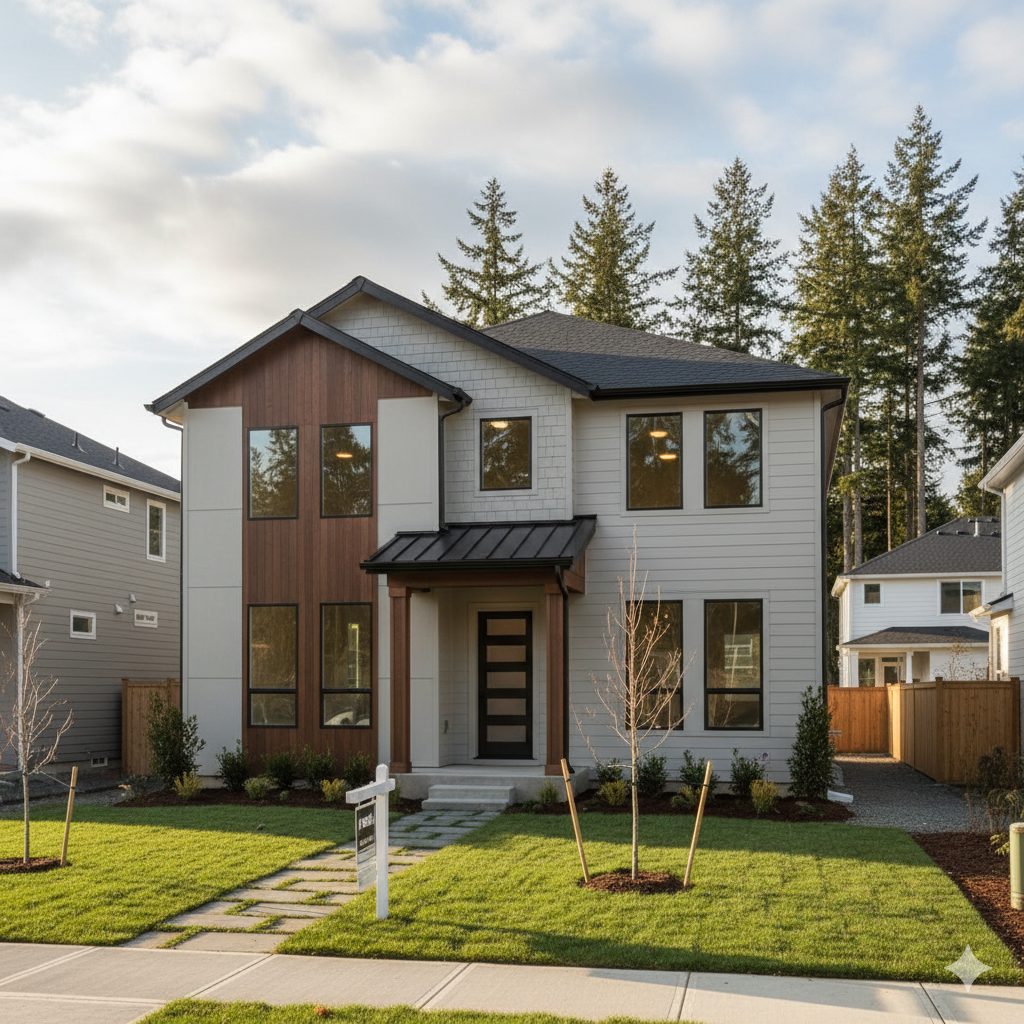
The Lake Hills New Build: A Buyer’s Guide
Lake Hills is turning over. The neighborhood that defined itself through mid-century ramblers, split-levels, and tri-levels is seeing a new chapter, and the new builds arriving on its lots are a significant departure from what came before. For the right buyer, they represent something genuinely hard to find on the Eastside: new construction in an established neighborhood with mature trees, walkable streets, and decades of community character already in place.
What makes them distinctive
New builds in Lake Hills are shaped by Bellevue city code. The 35-foot height limit and 15-foot combined side yard setback define the envelope these homes are built within, which means they tend to rise vertically and present prominently on their lots. Yards are smaller than on the original homes, the footprint of the house takes priority, but what’s inside reflects current buyer expectations in ways that older homes require significant investment to match.
These are grand homes by the neighborhood’s historical standards. Three thousand square feet and above is common. High-end kitchen appliances, open main floors, and finishes that don’t require immediate updating are the baseline. Most feature two primary suites, which is the detail that changes who can live in them.
You’re also beginning to see duplexes appear in Lake Hills, reflecting Bellevue’s movement toward denser housing allowances. For buyers interested in an owner-occupied duplex or an investment property in an established neighborhood, this is worth watching closely.
Why buyers choose them
The dual primary suite is the floor plan feature that defines the new build buyer in this neighborhood. Multi-generational households, adult children returning home, aging parents moving in – these living arrangements are increasingly common on the Eastside, and a home with two genuine primary suites makes them workable in a way that retrofitting an older home rarely does.
The work-from-home reality is also built into these homes in a way older homes weren’t designed for. Two dedicated offices, wired for the demands of video calls and fast connections, are increasingly standard. Garages are roughed in or equipped for electric vehicle charging. These aren’t upgrades. They’re baseline expectations for a buyer spending at this price point.
For buyers who want to move in and live rather than renovate, a new build removes the uncertainty that comes with a 60-year-old home. No sewer scope surprises. No electrical panel conversations. No decisions about what to update first.
What buyers should know
The trade-off for all of that newness is yard. New builds in Lake Hills sit on the same lots as the homes they replaced, and a 3,000 square foot home on a 7,500 square foot lot leaves considerably less outdoor space than a 1,400 square foot rambler on the same parcel. Buyers who prioritize outdoor living, gardening, or space for kids to run should weigh that honestly.
One thing worth knowing about Lake Hills specifically: homeowners don’t own mineral rights. It’s in the preliminary title, which is exactly why you should read it carefully. If you had plans to mine for gold, Lake Hills is not your neighborhood.
The garage is always finished in new builds, though the quality of finishes varies. A concrete floor is standard. Epoxy flooring, built-ins, and custom storage tend to be features that a known buyer has paid for during the build. If those details matter to you, it’s worth asking what’s included and what was added.
A developing distinction in the neighborhood is worth understanding. The new builds that first arrived in Lake Hills are now being resold, which means there are effectively two tiers of new construction available: the earlier wave of new builds and the homes coming fresh to market today. That range gives buyers real options and is helping to keep the price point more accessible than you might expect for new construction in Bellevue. If you want current finishes at a new build premium, they’re available. If you want a home that’s already been lived in and priced accordingly, that’s increasingly available too.
Who they’re right for
New builds suit buyers who want current finishes and systems, need a floor plan built for modern life, and are bringing multiple generations or multiple remote workers under one roof. They’re also worth watching for investors and buyers interested in the emerging duplex opportunities as Bellevue’s density allowances continue to evolve.
If you’re interested in new construction in Lake Hills or want to understand how new builds are affecting values across the neighborhood, I’m glad to talk through it with you.
Maggie Wong | Coldwell Banker Bain | 425-765-8042 | Maggie.Wong@cbrealty.com
Informed Real Estate for Every Move
The Lake Hills Traditional: A Buyer’s Guide
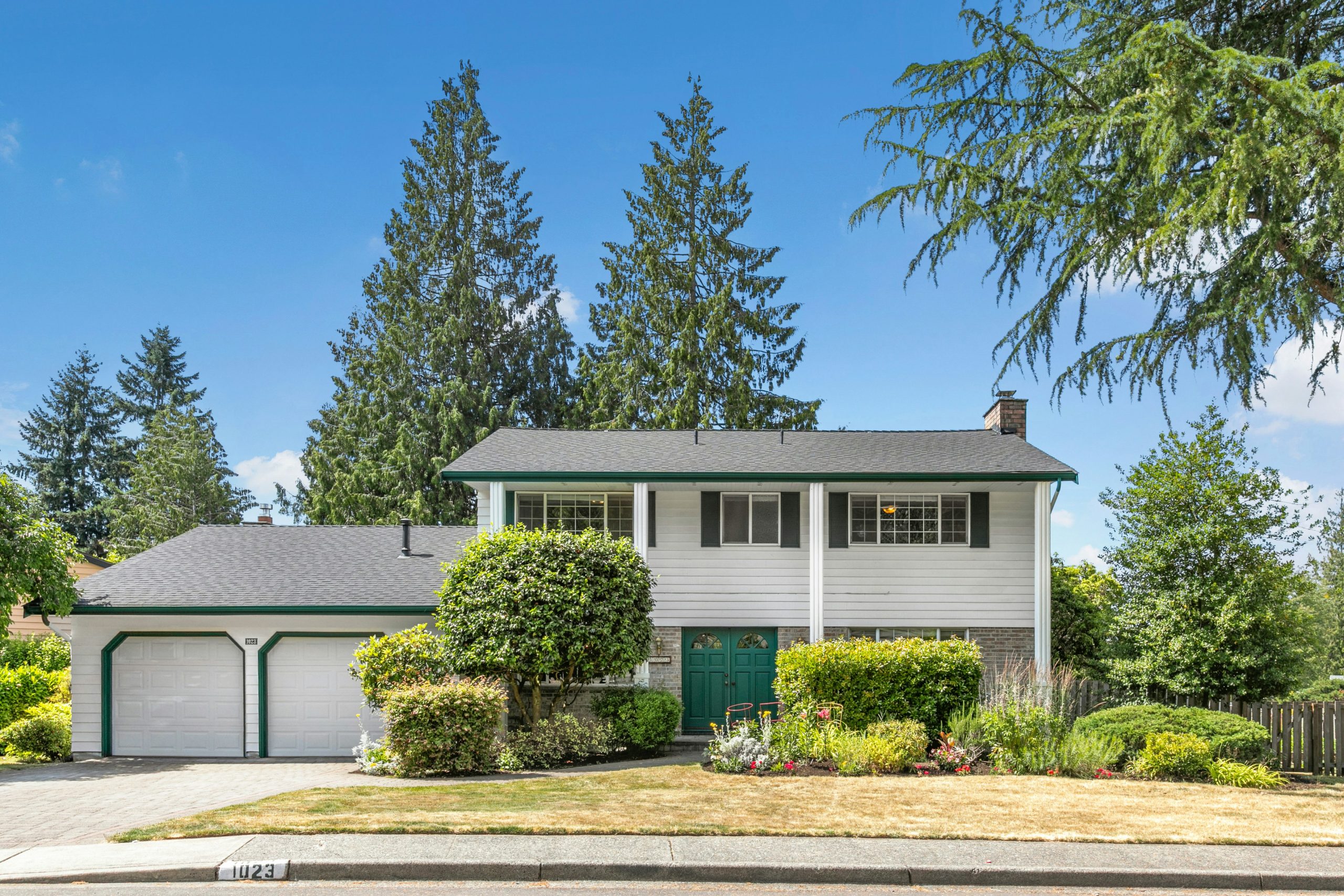
The Lake Hills Traditional: A Buyer’s Guide
The traditional is a favorite in Lake Hills, and buyers who have lived in one tend to stay loyal to the style. Two full floors stacked cleanly on top of one another, formal spaces that feel considered, and a floor plan that rewards daily life in ways that aren’t always obvious until you’re in one.
What makes them distinctive
In Lake Hills, traditional means colonial. Two stories, symmetrical, with shared spaces on the main floor and bedrooms above. Newer neighborhoods built in the 1990s took the traditional form in a more expressive direction, with angled rooms, dramatic bump-outs, and architectural flourishes that reflect the design sensibility of that era. The Lake Hills colonial is a different animal: more classical in its proportions, more predictable in the best sense, and built for the long haul.
The staircase is a defining feature. Often positioned as a focal point of the entry, it’s typically marked by hardwood treads and finials that give the home a sense of arrival you don’t find in the other styles.
The main floor is organized around formal spaces: a living room, a dining room, and a kitchen that connects to both. Traditionals tend to have generous window counts on all sides of the home, which means natural light moves through the house as the day progresses. What Lake Hills traditional buyers often discover is the circular floor plan, the way the main floor loops from one room to the next without dead ends. On a rainy Pacific Northwest afternoon, you can take your laps inside.
Upstairs you’ll typically find four to five bedrooms and at least two, often three, bathrooms. Nearly all traditionals in this neighborhood include a primary en suite, even if that means a modest 32-inch shower pan. The space is there, and for buyers with imagination about how walls can move, the upside is real.
Why buyers choose them
Square footage above grade is the financial argument. Traditionals tend to appraise higher than split-levels or tri-levels of comparable size because all the living space sits above ground. Lenders and appraisers treat above-grade square footage more favorably, which matters both when you buy and when you eventually sell.
The formal rooms are another draw. A dedicated living room and dining room give a household options that open-plan homes don’t offer. Space for a real dinner party. A room that isn’t the kitchen for guests to gather in. Buyers who grew up in homes with distinct rooms often find that returning to that layout feels right in a way they didn’t expect.
The bedroom count is also a practical advantage. Four or five bedrooms covers a lot of life stages: kids, guests, a home office, a dedicated hobby room. The primary en suite, however modest in some homes, means the couple at the top of the household isn’t sharing a bathroom with everyone else.
What buyers should know
Traditionals are generally well-built homes, but age matters here too. Sewer scope, electrical panel, and plumbing checks apply. One practical advantage worth noting: because the two floors mirror each other in footprint, heating and cooling systems are more straightforward to design and upgrade than in split-levels or tri-levels. The math is simpler, the ductwork is more logical, and contractors appreciate the predictability.
The staircase, while a feature, should be inspected for structural integrity, especially in homes where the finials and railings haven’t been updated. Roof condition is worth close attention on a two-story home. More square footage of roof means more potential surface area for deferred maintenance. A thorough house inspection and honest conversation about roof age and condition is essential.
The primary en suite in some of these homes is compact by current standards. Buyers who want a spa-caliber primary bathroom should go in with realistic expectations about what the existing footprint allows, and have an architect or contractor conversation about what’s possible.
Who they’re right for
Traditionals suit buyers who want formal spaces, strong resale fundamentals, and a floor plan that organizes the household clearly between shared and private zones. They’re a strong fit for families, buyers who entertain, and anyone who places value on bedroom count and bathroom separation. The colonial character of the Lake Hills traditional also gives these homes a curb appeal that holds up across decades.
If you’re considering a traditional in Lake Hills and want to talk through what a specific home is worth or what updates make the most sense, I’m glad to walk through it with you.
Maggie Wong | Coldwell Banker Bain | 425-765-8042 | Maggie.Wong@cbrealty.com
Informed Real Estate for Every Move
The Lake Hills Tri-Level: A Buyer’s Guide
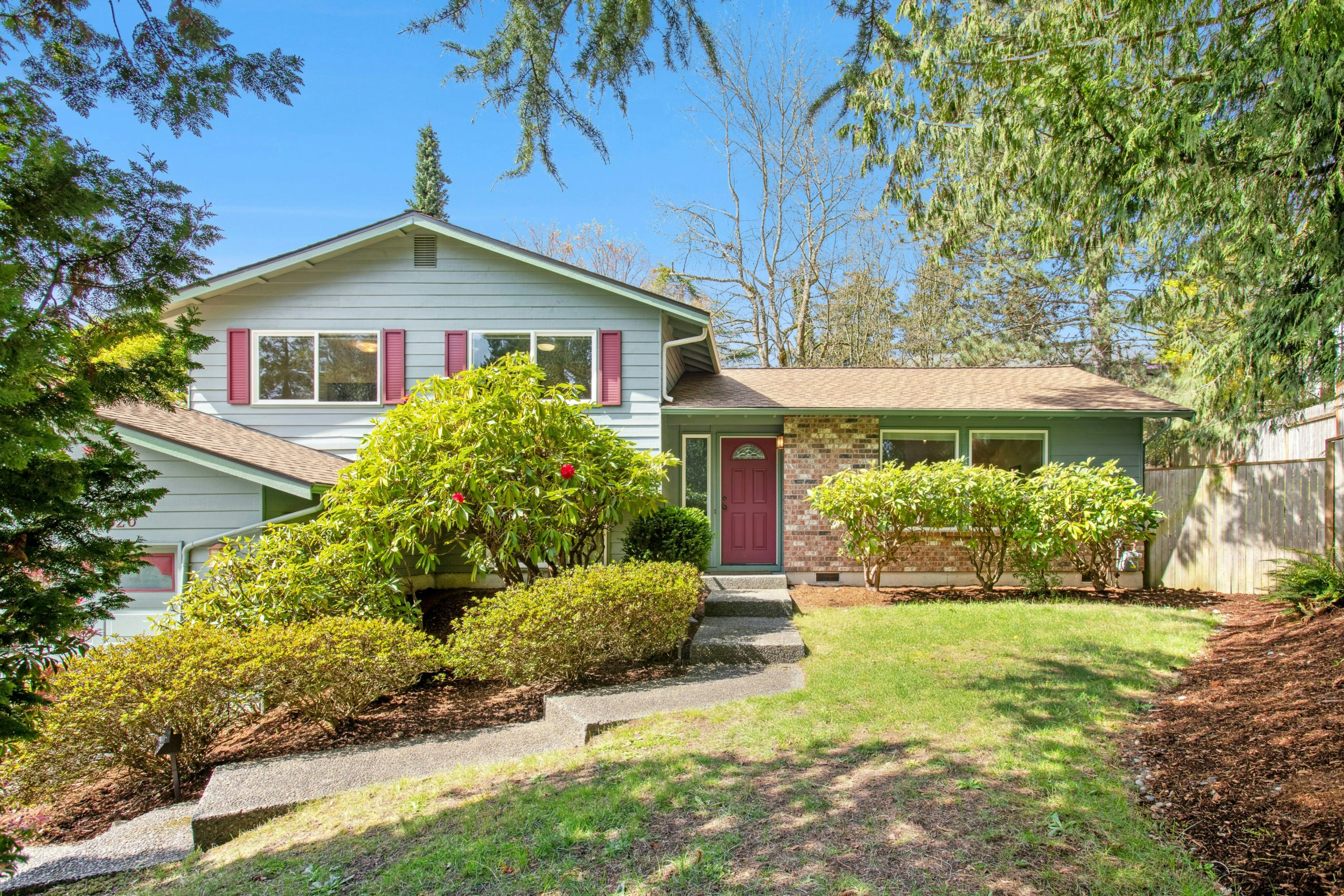
The Lake Hills Tri-Level: A Buyer’s Guide
The tri-level is the most architecturally ambitious home style in Lake Hills. Built from the late 1950s through the early 1980s, these homes were designed around a simple but clever idea: organize life into three distinct zones, each on its own level, connected by short staircases that keep everything within easy reach.
What makes them distinctive
The layout tells the story. The main floor is the shared zone, living room, kitchen, dining, the place where the household comes together. A short staircase up leads to the sleep zone, typically three or four bedrooms. A short staircase down leads to the flex space: family room, home office, guest room, or some combination of all three. Each level has a clear purpose and the short staircases between them make the home feel connected rather than fragmented.
Tri-levels also tend to be the most visually interesting homes in the neighborhood. More complex rooflines, vaulted ceilings on the main floor, and large windows that bring light deep into the living areas give these homes a presence that ramblers and split-levels don’t always match. Square footage varies considerably, but four bedrooms and upward of 2,000 square feet is common, more home than the footprint suggests.
Lot sizes run the same as the rest of the neighborhood, typically 7,000 to 10,000 square feet.
Why buyers choose them
Buyers who want space, light, and a floor plan with genuine separation tend to gravitate toward tri-levels. The three-zone layout works especially well for families, kids upstairs, adults working downstairs, everyone meeting in the middle. It also suits multi-generational households where a lower level can function as a semi-independent space.
Tri-levels are also genuinely great homes for entertaining. The main floor is naturally welcoming, open, light-filled, and designed for gathering. And because the sleep zone and flex space are each a short staircase away, guests stay where they’re meant to be. Nobody accidentally wanders into the laundry pile or the home office. The layout does that work for you.
The vaulted ceilings and large windows are a real draw. In many tri-levels the main floor features original Northwest cedar ceiling details that add warmth and character you simply can’t buy new. A well-maintained tri-level with these original architectural elements feels spacious and grounded in a way that’s hard to replicate in newer construction at a comparable price point.
What buyers should know
Those vaulted ceilings and large windows are wonderful to live with, and they come with a cost consideration worth understanding before you fall in love with a home. Replacement windows in non-standard sizes run significantly higher than standard units. Rooflines with more complexity cost more to repair and replace. Vaulted ceilings mean more volume to heat and cool. None of these are reasons to walk away from a great home, but they’re worth factoring into your thinking about long-term ownership costs.
The same due diligence that applies to every older home in Lake Hills applies here. Sewer scope, electrical panel, plumbing, and insulation. Deck inspection, including how the deck is attached to the house and whether the footers are properly set. These homes are between 40 and 65 years old, and the condition varies widely. A well-maintained tri-level is an excellent home. An under-maintained one can carry surprises.
Who they’re right for
Tri-levels suit buyers who want more square footage, more architectural character, and a layout that genuinely organizes the way a household lives. They’re a strong fit for families, buyers who work from home, and anyone who values natural light and interesting spaces over the predictable. They reward buyers who go in with clear eyes about what older homes require.
If you’re considering a tri-level in Lake Hills and want to talk through what to look for or what a specific home is worth, I’m glad to walk through it with you.
Maggie Wong | Coldwell Banker Bain | 425-765-8042 | Maggie.Wong@cbrealty.com
Informed Real Estate for Every Move
The Lake Hills Split-Level: A Buyer’s Guide
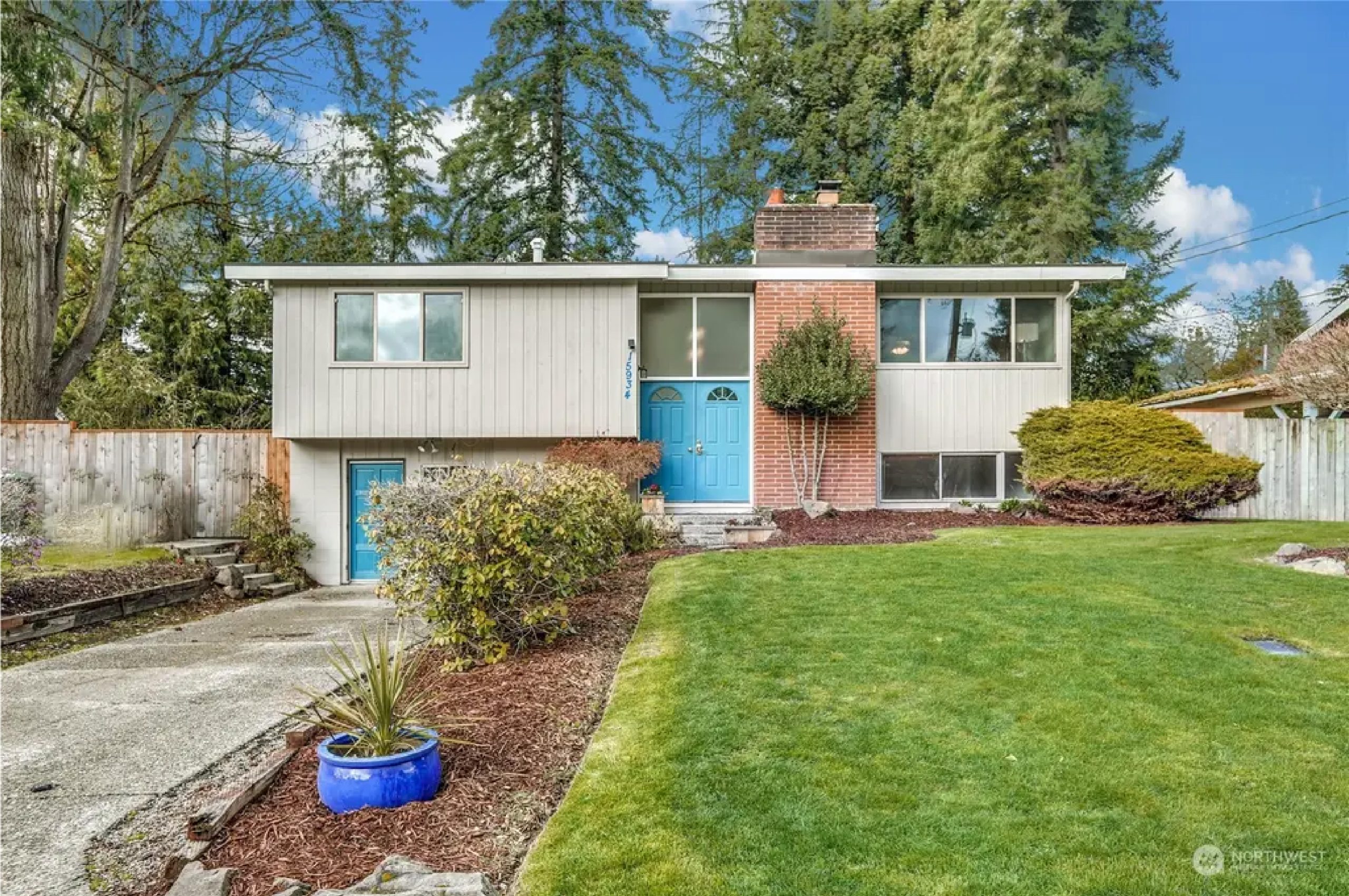
The Lake Hills Split-Level: A Buyer’s Guide
If the rambler is Lake Hills’ founding home, the split-level is its adolescent years. Built mostly between 1960 and 1980, split-levels are the home of Generation X – practical, a little unconventional, and more interesting than they first appear. Like the generation they housed, they’ve aged well and they’re having a moment.
What makes them distinctive
The split-level gets its name from what happens the moment you walk in the door. Unlike a two-story home where all the bedrooms are upstairs, or a rambler where everything is on one floor, a split-level greets you mid-stair. From the entry, you go up a short flight to the bedrooms or down a short flight to the lower level. Two or three steps in either direction, and you’re in a completely different zone of the house.
Think of it as the mullet of floor plans: business in the front, party in the back. The main living areas tend to be bright and street-facing. The lower level, built into the ground, stays naturally cool and functions as a family room, rec space, or in-law suite. The separation of spaces is genuinely useful once you understand how to live in it.
Lot sizes in Lake Hills split-levels are similar to the ramblers, typically 7,000 to 10,000 square feet, and the homes themselves tend to offer more square footage than a rambler on the same footprint.
Why buyers choose them
Space is the primary draw. A split-level typically delivers more living area per dollar than a comparable rambler, and the natural separation of levels works well for households that want distinct zones for work, sleep, and living. Families with teenagers appreciate having a lower level that functions semi-independently. Buyers who work from home often claim the lower level as a dedicated office.
The lower level is also a natural bonus in the Pacific Northwest. Built into the grade, it stays cool through summer without air conditioning, which matters more every year on the Eastside.
What buyers should know
Split-levels are a favorite among remodelers, and for good reason. The floor plans respond well to updates, and the most popular improvement is opening the kitchen to the living area by removing the partial wall between them. It transforms the feel of the main floor. If that’s on your list, consult with an architect or structural engineer before assuming it’s straightforward – some of those walls are load-bearing, and knowing what you’re working with before you make an offer is worth the conversation.
Decks deserve specific attention on homes this age. Make sure the house inspection covers the deck thoroughly, not just the surface boards, but how the deck is attached to the house and whether the footers are properly set in the ground. A deck that looks fine from above can have serious structural issues at the ledger board or below grade. It’s one of the things I always flag when walking through a split-level with a buyer.
The same age-related considerations that apply to ramblers apply here. Sewer scope, electrical panel, plumbing, insulation. These homes are between 45 and 65 years old. The ones that have been well maintained or thoughtfully updated are genuinely excellent homes. The ones that haven’t will tell you quickly.
Who they’re right for
Split-levels suit buyers who want more space than a rambler offers and aren’t looking for a traditional two-story. They work well for families, buyers who need separation between living and working spaces, and anyone who appreciates a home with a little more personality than the obvious choices. They’re also a strong option for buyers who want to put their stamp on a home – there’s real upside in a well-executed split-level renovation.
If you’re looking at split-levels in Lake Hills and want an honest read on what a particular home is worth or what it would take to update it, I’m glad to walk through it with you.
Maggie Wong | Coldwell Banker Bain | 425-765-8042 | Maggie.Wong@cbrealty.com
Informed Real Estate for Every Move
The Lake Hills Rambler: A Buyer’s Guide
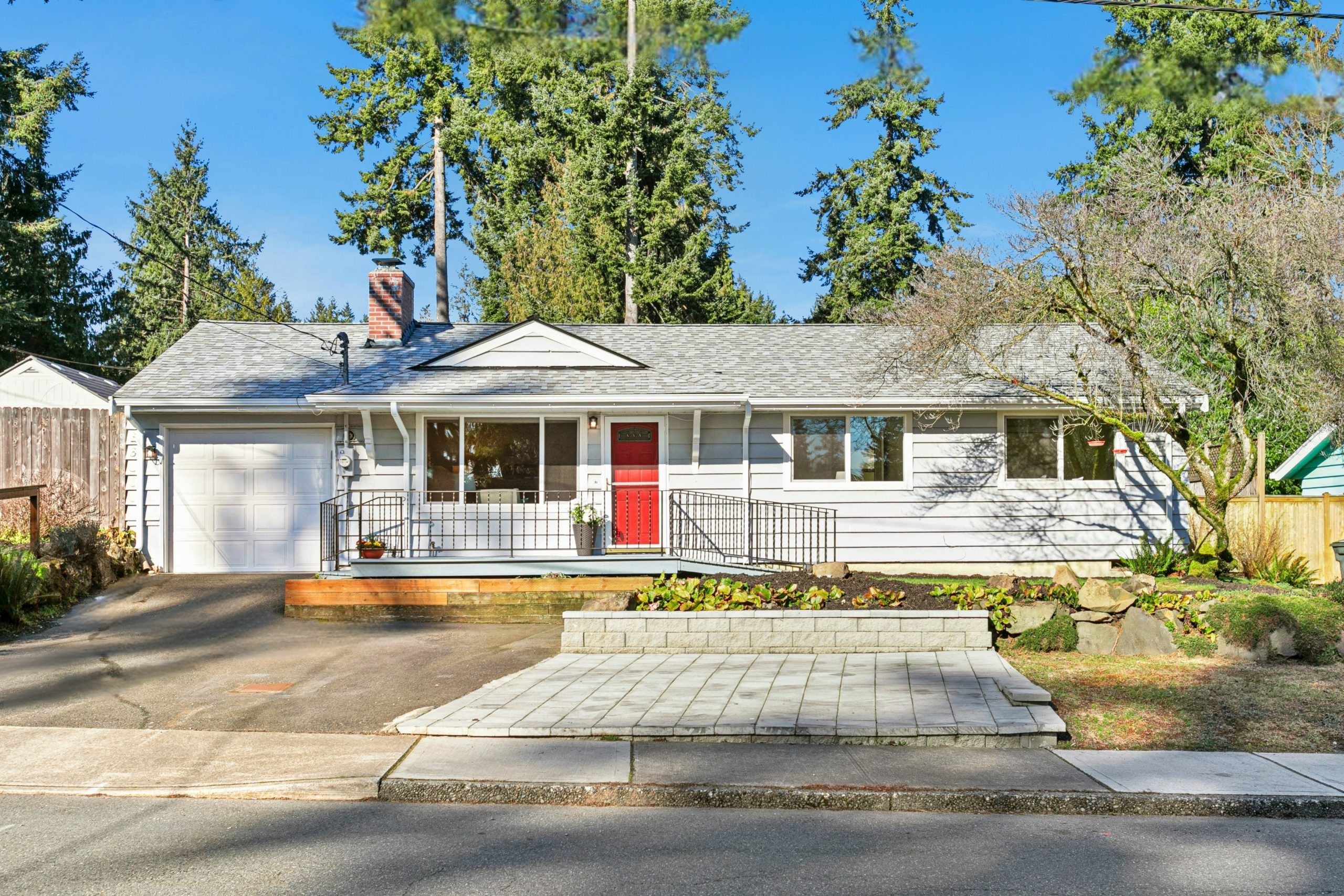
The Lake Hills Rambler: A Buyer's Guide
If Lake Hills has a signature home, it's the rambler. Built mostly between the late 1950s and early 1960s, these single-story homes are what the neighborhood is known for, and for good reason. They defined how the community was built and they still set the tone for the streetscape today.
What makes them distinctive
Ramblers are defined by their single-story layout, with everything on one level and no stairs between living spaces. In Lake Hills, they typically sit on lots of 7,000 to 10,000 square feet, which is generous by Eastside standards and one of the reasons the neighborhood has held its appeal for decades.
Inside, the original homes were built with short board hardwood floors in the living areas, a characteristic that buyers and renovators still prize. The floor plans tend to be straightforward: living room at the front, bedrooms down a hall, kitchen and dining toward the back with access to the yard.
Architecturally, they're modest and horizontal. Low-pitched rooflines, wide eaves, attached carports or garages. Some have been updated extensively. Others retain much of their original character.
Why buyers choose them
The single-level layout is the most obvious draw, and it serves a wide range of buyers well. Families with young children appreciate not having to manage stairs. Buyers thinking ahead about aging in place find the layout genuinely practical. Downsizers coming from larger two-story homes often discover that a well-laid-out rambler lives bigger than it looks on paper.
The lot sizes are another reason. Outdoor space on the Eastside at this price point is increasingly hard to find, and a 9,000 square foot lot in Lake Hills offers room for a garden, a play structure, or simply a backyard that feels like a backyard.
What buyers should know
These homes are nearly 70 years old, and age brings things to watch for. Original plumbing and sewer lines are common, and a sewer scope before any offer is not optional in this neighborhood. Electrical panels in homes that haven't been updated may be undersized for modern use. Insulation, windows, and HVAC systems in unimproved homes often need attention.
The upside is that the bones are typically good and ramblers are relatively straightforward to update within the original footprint. The attic runs the full length of the home and the crawl space sits beneath it, which means contractors have access to walls, plumbing, and electrical from both above and below. That kind of access makes renovations cleaner and less invasive than in many other home styles. A rambler that has been thoughtfully updated can feel entirely current without losing what makes it worth buying in the first place.
Who they're right for
Ramblers suit buyers who value single-level living, outdoor space, and a neighborhood with genuine character. They're a natural fit for downsizers, families, and buyers who want a home they can improve over time. They're also increasingly attractive to buyers who recognize that well-located, well-structured older homes on good lots are harder to find every year.
If you're considering a rambler in Lake Hills and want to know what to look for, or what a specific home is worth, I'm glad to take a look with you.
Maggie Wong | Coldwell Banker Bain | 425-765-8042 | Maggie.Wong@cbrealty.com
Informed Real Estate for Every Move