
 Facebook
 X
X
 Pinterest
 Copy Link
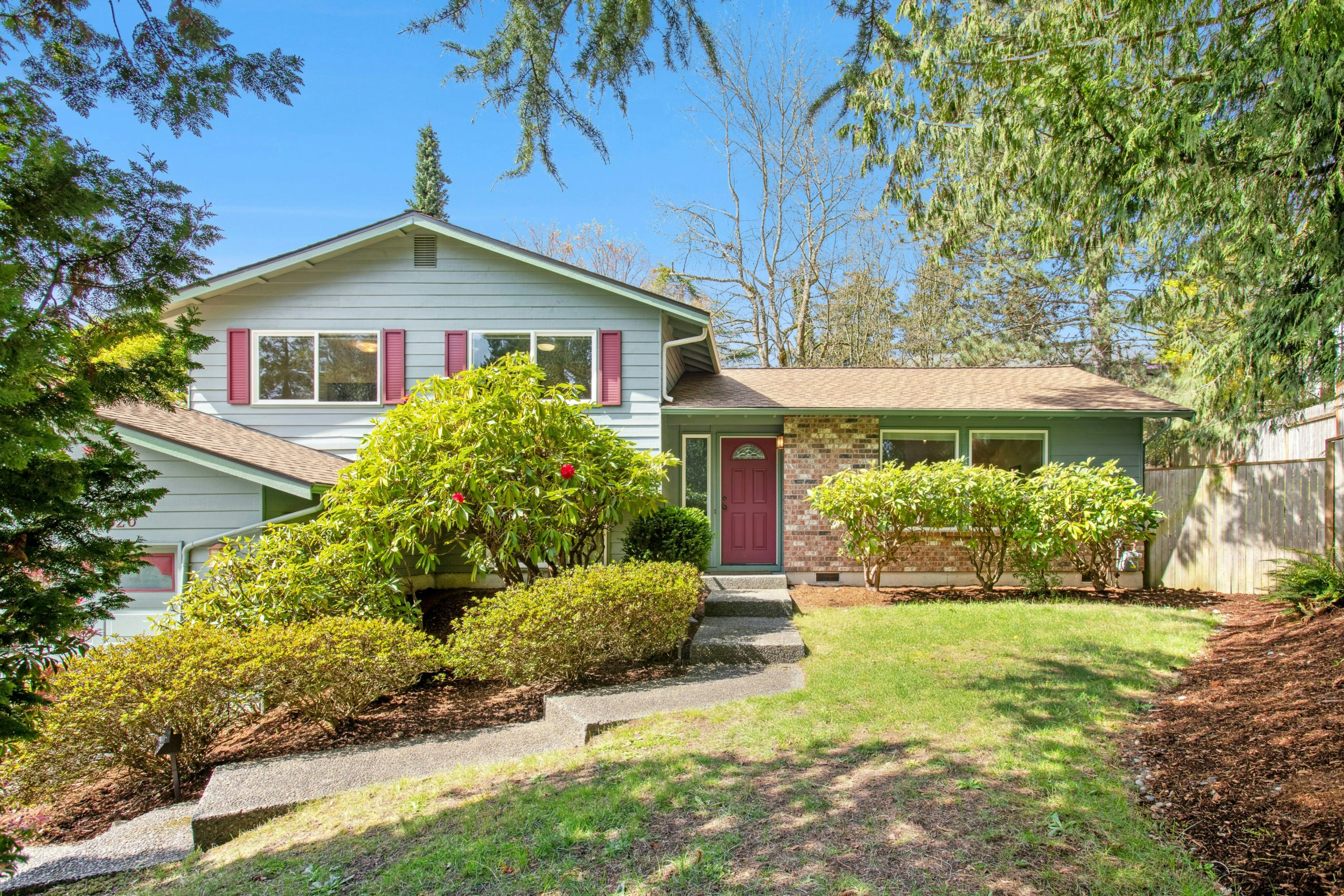
The Lake Hills Tri-Level: A Buyer’s Guide
The tri-level is the most architecturally ambitious home style in Lake Hills. Built from the late 1950s through the early 1980s, these homes were designed around a simple but clever idea: organize life into three distinct zones, each on its own level, connected by short staircases that keep everything within easy reach.
What makes them distinctive
The layout tells the story. The main floor is the shared zone, living room, kitchen, dining, the place where the household comes together. A short staircase up leads to the sleep zone, typically three or four bedrooms. A short staircase down leads to the flex space: family room, home office, guest room, or some combination of all three. Each level has a clear purpose and the short staircases between them make the home feel connected rather than fragmented.
Tri-levels also tend to be the most visually interesting homes in the neighborhood. More complex rooflines, vaulted ceilings on the main floor, and large windows that bring light deep into the living areas give these homes a presence that ramblers and split-levels don’t always match. Square footage varies considerably, but four bedrooms and upward of 2,000 square feet is common, more home than the footprint suggests.
Lot sizes run the same as the rest of the neighborhood, typically 7,000 to 10,000 square feet.
Why buyers choose them
Buyers who want space, light, and a floor plan with genuine separation tend to gravitate toward tri-levels. The three-zone layout works especially well for families, kids upstairs, adults working downstairs, everyone meeting in the middle. It also suits multi-generational households where a lower level can function as a semi-independent space.
Tri-levels are also genuinely great homes for entertaining. The main floor is naturally welcoming, open, light-filled, and designed for gathering. And because the sleep zone and flex space are each a short staircase away, guests stay where they’re meant to be. Nobody accidentally wanders into the laundry pile or the home office. The layout does that work for you.
The vaulted ceilings and large windows are a real draw. In many tri-levels the main floor features original Northwest cedar ceiling details that add warmth and character you simply can’t buy new. A well-maintained tri-level with these original architectural elements feels spacious and grounded in a way that’s hard to replicate in newer construction at a comparable price point.
What buyers should know
Those vaulted ceilings and large windows are wonderful to live with, and they come with a cost consideration worth understanding before you fall in love with a home. Replacement windows in non-standard sizes run significantly higher than standard units. Rooflines with more complexity cost more to repair and replace. Vaulted ceilings mean more volume to heat and cool. None of these are reasons to walk away from a great home, but they’re worth factoring into your thinking about long-term ownership costs.
The same due diligence that applies to every older home in Lake Hills applies here. Sewer scope, electrical panel, plumbing, and insulation. Deck inspection, including how the deck is attached to the house and whether the footers are properly set. These homes are between 40 and 65 years old, and the condition varies widely. A well-maintained tri-level is an excellent home. An under-maintained one can carry surprises.
Who they’re right for
Tri-levels suit buyers who want more square footage, more architectural character, and a layout that genuinely organizes the way a household lives. They’re a strong fit for families, buyers who work from home, and anyone who values natural light and interesting spaces over the predictable. They reward buyers who go in with clear eyes about what older homes require.
If you’re considering a tri-level in Lake Hills and want to talk through what to look for or what a specific home is worth, I’m glad to walk through it with you.
Maggie Wong | Coldwell Banker Bain | 425-765-8042 | Maggie.Wong@cbrealty.com
Informed Real Estate for Every Move