
 Facebook
 X
X
 Pinterest
 Copy Link
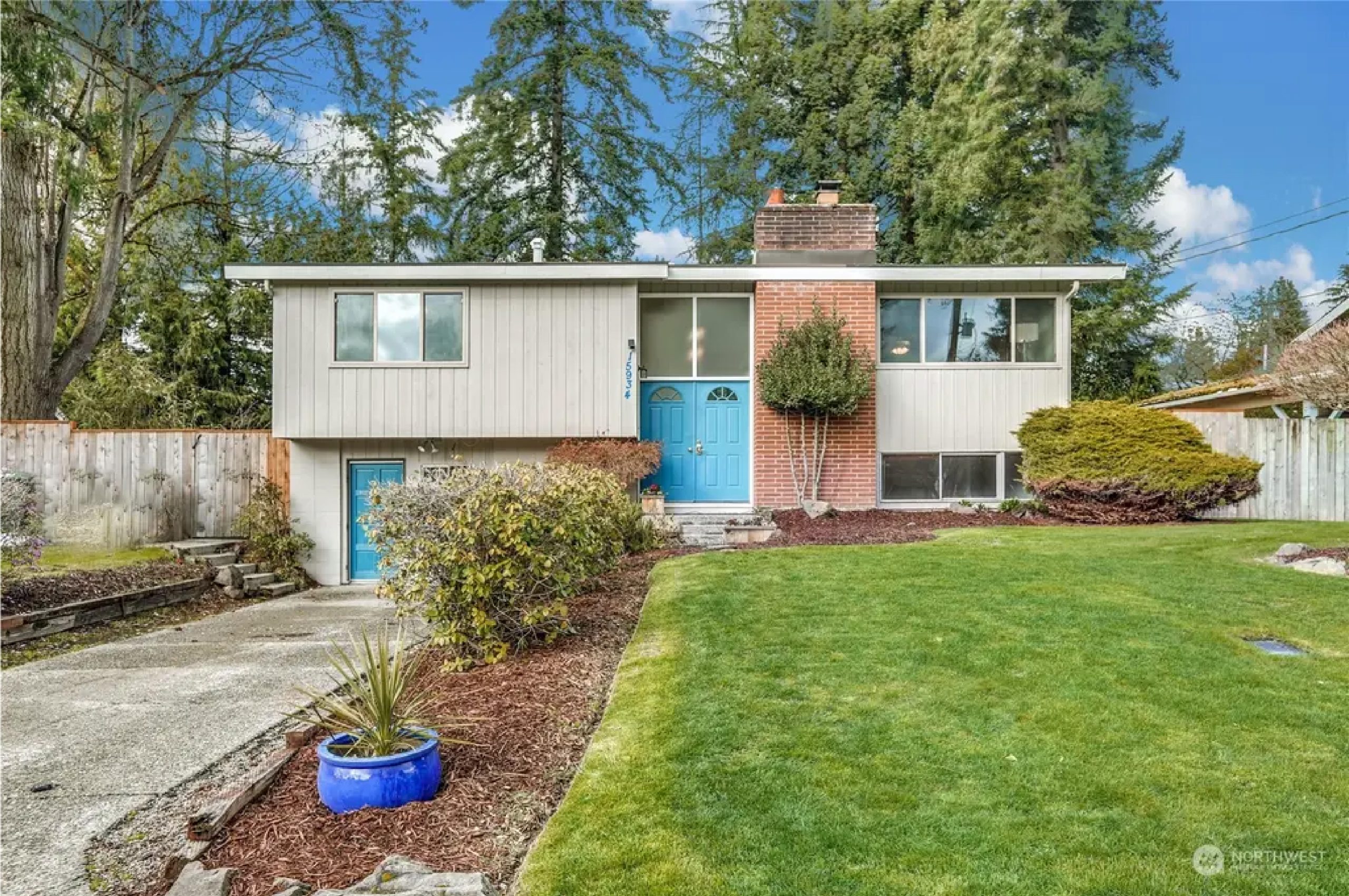
The Lake Hills Split-Level: A Buyer’s Guide
If the rambler is Lake Hills’ founding home, the split-level is its adolescent years. Built mostly between 1960 and 1980, split-levels are the home of Generation X – practical, a little unconventional, and more interesting than they first appear. Like the generation they housed, they’ve aged well and they’re having a moment.
What makes them distinctive
The split-level gets its name from what happens the moment you walk in the door. Unlike a two-story home where all the bedrooms are upstairs, or a rambler where everything is on one floor, a split-level greets you mid-stair. From the entry, you go up a short flight to the bedrooms or down a short flight to the lower level. Two or three steps in either direction, and you’re in a completely different zone of the house.
Think of it as the mullet of floor plans: business in the front, party in the back. The main living areas tend to be bright and street-facing. The lower level, built into the ground, stays naturally cool and functions as a family room, rec space, or in-law suite. The separation of spaces is genuinely useful once you understand how to live in it.
Lot sizes in Lake Hills split-levels are similar to the ramblers, typically 7,000 to 10,000 square feet, and the homes themselves tend to offer more square footage than a rambler on the same footprint.
Why buyers choose them
Space is the primary draw. A split-level typically delivers more living area per dollar than a comparable rambler, and the natural separation of levels works well for households that want distinct zones for work, sleep, and living. Families with teenagers appreciate having a lower level that functions semi-independently. Buyers who work from home often claim the lower level as a dedicated office.
The lower level is also a natural bonus in the Pacific Northwest. Built into the grade, it stays cool through summer without air conditioning, which matters more every year on the Eastside.
What buyers should know
Split-levels are a favorite among remodelers, and for good reason. The floor plans respond well to updates, and the most popular improvement is opening the kitchen to the living area by removing the partial wall between them. It transforms the feel of the main floor. If that’s on your list, consult with an architect or structural engineer before assuming it’s straightforward – some of those walls are load-bearing, and knowing what you’re working with before you make an offer is worth the conversation.
Decks deserve specific attention on homes this age. Make sure the house inspection covers the deck thoroughly, not just the surface boards, but how the deck is attached to the house and whether the footers are properly set in the ground. A deck that looks fine from above can have serious structural issues at the ledger board or below grade. It’s one of the things I always flag when walking through a split-level with a buyer.
The same age-related considerations that apply to ramblers apply here. Sewer scope, electrical panel, plumbing, insulation. These homes are between 45 and 65 years old. The ones that have been well maintained or thoughtfully updated are genuinely excellent homes. The ones that haven’t will tell you quickly.
Who they’re right for
Split-levels suit buyers who want more space than a rambler offers and aren’t looking for a traditional two-story. They work well for families, buyers who need separation between living and working spaces, and anyone who appreciates a home with a little more personality than the obvious choices. They’re also a strong option for buyers who want to put their stamp on a home – there’s real upside in a well-executed split-level renovation.
If you’re looking at split-levels in Lake Hills and want an honest read on what a particular home is worth or what it would take to update it, I’m glad to walk through it with you.
Maggie Wong | Coldwell Banker Bain | 425-765-8042 | Maggie.Wong@cbrealty.com
Informed Real Estate for Every Move